
Achieving inflation target of 4 per cent, recovery after remonetisation and hardening profile of oil prices are some of the risks which the RBI is watching closely, says Gaurav Kapur.

The RBI's mistake may have been in interpreting its mandate to maintain retail inflation at 4%, with 2% leeway in either direction, as being a mandate that permitted it to do nothing even when inflation was at or near the upper bound of 6%, observes T N Ninan.
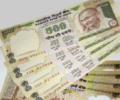
The Reserve Bank of India (RBI) on Monday realigned the bank rate to marginal standing facility (MSF) rate in one-time technical adjustment. The bank rate now stands at 9.5 per cent as against six per cent earlier.

'Banks will continue to increase FD rates to attract more deposits and meet the increasing demand for credit.'

The RBI is fully aware that the high-cost loans and high indebtedness of the borrowers could pose financial stability risks, if not addressed by these NBFCs. Governor Shaktikanta Das has issued a stern warning, saying the RBI is closely monitoring these areas and will not hesitate to take appropriate action, if necessary, if the culprits don't opt for self-correction. Watch out for some action, soon, notes Tamal Bandyopadhyay.

Union Finance Minister Nirmala Sitharaman on Monday said people are finding current interest rates "very stressful" and urged banks to make them affordable. Speaking at an event organised by State Bank of India, the finance minister said that at present, India requires industry to ramp up and invest in new facilities, and added that lowering lending rates can help achieve the "Viksit Bharat" aspiration.

What's encouraging is that the process of unwinding some of the extraordinary steps taken in last July-August is continuing, so moreliberalisation is back on their agenda.
RBI had previously cut repo rate by 0.25% each in January and March.
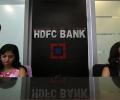
HDFC Bank, the country's second-largest private sector bank, has cut its base rate by 15 basis points (bps) to 9.70 per cent.

Kotak Mahindra Bank was the biggest loser in the Sensex pack, sliding 2.68 per cent, followed by Tech Mahindra, Mahindra & Mahindra, Axis Bank, Hindustan Unilever, Tata Motors, Tata Consultancy Services, Bajaj Finserv, Bajaj Finance, Nestle and Titan. In contrast, NTPC, Power Grid, Larsen & Toubro, HDFC, Reliance and HDFC Bank were the gainers.

The liquidity in the banking system moved into surplus almost after three months as the Reserve Bank of India (RBI) absorbed over Rs 40,000 crore from the market on Monday, predominantly on the back of increased government spending. However, this situation may be short-lived given the higher demand for funds to pay taxes and year-end targets, treasury executives said. Meanwhile, two variable reverse repo rate (VRRR) auctions held on Tuesday received weak response.

The RBI, in its last policy statement, had mentioned that 'headroom for further monetary easing remains quite limited' due to risks on account of the current account, and pressures on inflation.

The cost of deposits is on the rise, but banks can't raise interest rate on close to 60% of their loan books, points out Tamal Bandyopadhyay.

In its Fifth Bi-monthly Monetary Policy Statement, 2017-18, RBI said the second quarter growth was lower than the one that was projected in the October review, and the recent increase in oil prices may have a negative impact on margins of firms and Gross Value Added (GVA) growth.

Bharatiya Janata Party on Tuesday said hike in the key interest rate by Reserve Bank of India on Tuesday would actually increase inflation as the government has failed to address supply side issues.
The central bank cut SLR to 23 per cent from 24 per cent.
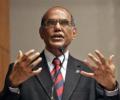
Is unhappy about banks' reluctance to pass on lower interest rates.
'Once the lockdown is lifted, we will see some pickup in demand.' 'And my sense is that it will be a long walk this time given that we have lost three months of economic activity.'

RBI may hold rates in Apr; to go for 25 bps cut by June: DBS

'The FY2023 inflation outcome is likely to exceed the RBI's current forecast by a wide margin.'
Policy rates are not likely to increase in 2008 but a cut in repo rate too is uncertain.
After attending a meeting in Mumbai with RBI's top brass headed by Governor D Subbarao, Harsha Pati Singhania, president, FICCI, said the real rate of interest remained in double digits despite inflation having declined sharply. "Given the present interest rate structure and the inflation rate, real rate of interest is still in double-digits. With the near-zero rate of inflation, the real and nominal rates of interest are almost at the same level," said another industrialist.

If you don't have a specific goal, but want intermittent liquidity, then ladder your FDs, that is, invest in FDs of varying maturities, such as one, two, three, five or even 10 years. Laddering ensures FDs mature at regular intervals.

Wholesale inflation fell to a 3-month low of 2.04 per cent in July on decline in prices of food items especially vegetables, government data released on Wednesday showed. The decline in wholesale price index (WPI) based inflation in July came after it rose for four months in a row till June, when it was 3.36 per cent. It was (-) 1.23 per cent in July last year. In April wholesale inflation stood at 1.19 per cent.

The RBI has cut key rates to boost the economy.

"The economy is going through a very difficult patch and business confidence has plummeted. New investments have slowed down," Assocham President Rajkumar Dhoot said during his interaction with RBI Governor D Subbarao ahead of the central bank's monetary policy review scheduled on April 17.

Heavy dollar selling by banks and exporters alongside debt-related inflows largely supported the rupee

Vegetable rates may ease from September, led by tomato prices, which have started showing signs of correction on the back of increased supply, Reserve Bank of India (RBI) Governor Shaktikanta Das said on Wednesday. "Looking ahead, the spike in vegetable prices in July is starting to see a correction, led by tomato prices. "New arrivals of tomatoes in mandis are already softening the prices, coupled with proactive supply management in the case of onions.

Corporate houses believe RBI must cut rates to boost investment in the system.

Foreign capital inflows also boosted the rupee value against the dollar

Soft crude prices will cut fuel subsidy bill and help contain fiscal slippage this year.

Although the RBI is not statutorily independent from the government, Rajan, like previous RBI Governors, has long valued his independence.
Benchmark policy rate unchanged at 6.75 per cent.

The spike in food prices at the onset of the monsoon season has corroborated the Reserve Bank of India's (RBI's) view that the fight against inflation is far from over, the State of the Economy report of the central bank said. At the same time, the report said that the country is poised to become the fastest-growing major economy in the world, notwithstanding some sequential moderation in economic activity in June. Consumer Price Index (CPI)-based inflation rate increased to 4.8 per cent in June 2023, from 4.3 per cent in May, primarily on account of an increase in food inflation.

Investors watch out for cues from the on-going winter session of the Parliament.

RBI Governor Raghuram Rajan on Tuesday kept the repo rate unchanged 6.50 per cent.
Still, in a week when the Reserve Bank of India has said that combating inflation is now its primary focus, it is important to ask: is RBI fighting yesterday's war, instead of peering into the future to glean what might be coming -- as monetary policy is supposed to do?

'There are occasions when the prices of individual items like food raise inflation; then supply-side measures must be taken.' 'But if there is continued inflation, it means liquidity is aggravating the situation.'
